Guides
Choosing a Wedding Band That Sits Flush With Your Engagement Ring
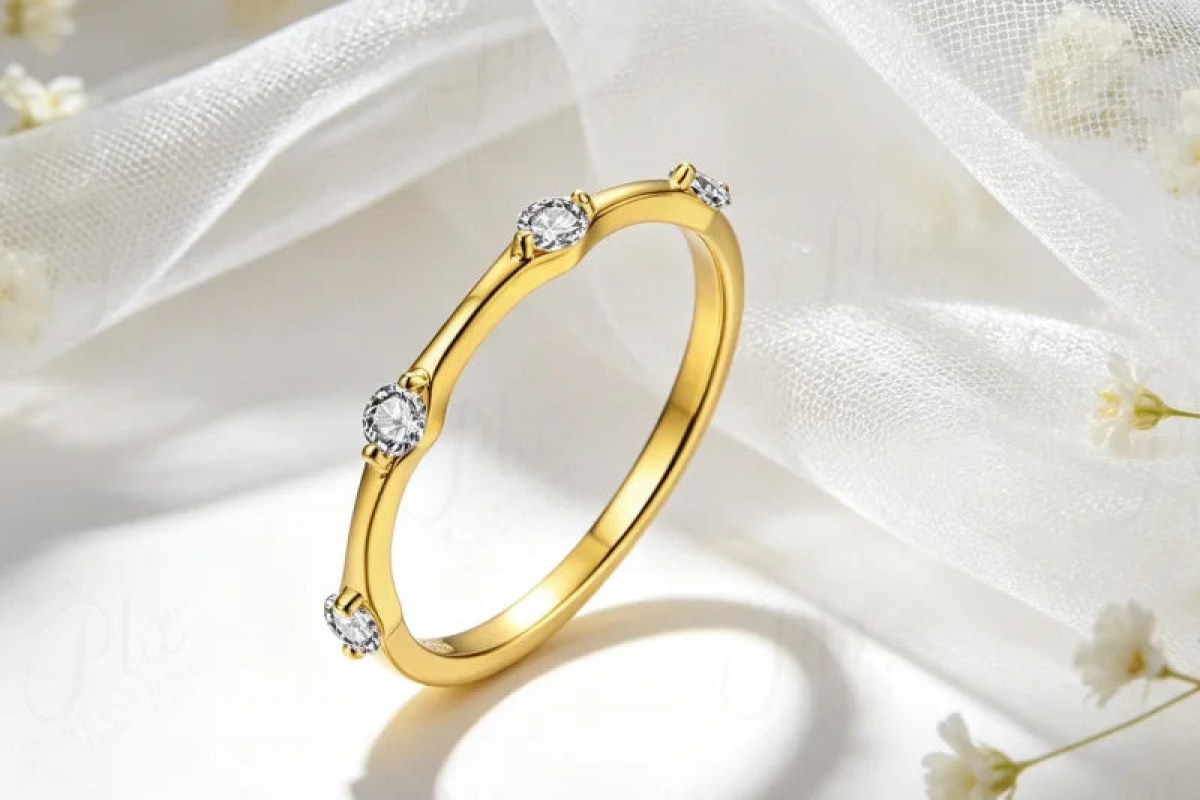
You picked the engagement ring, now you need the wedding band—and you want them to kiss, not fight. When a wedding band doesn't sit flush with your engagement ring, you feel a tiny gap every time you type, shake hands, or simply look at your hand. Over years, that gap also wears down the metal where the two rings rub against each other. Here is how to choose a band that fits like it was always meant to be there.
What "flush" actually means
A flush fit means the inner edges of the two rings touch completely, with no gap and no rocking. Your engagement ring's profile—how tall the prongs sit, whether there is a halo, how the basket is shaped—determines whether a straight, flat band will work or whether you need a shaped one.
Start by looking at your engagement ring from the side
Put the ring on a flat table and look at the profile. Does the metal shank sit flat, with the stone raised high above the band? Or does the setting dip down near the finger? Does a halo of small stones extend outward toward where the wedding band will sit?
- Simple solitaire, high setting: a straight band may sit flush, because there is nothing in the way.
- Low solitaire or bezel: a straight band often fits perfectly.
- Halo or pavé band: you will almost certainly need a shaped band, because small stones on the engagement ring stick out sideways.
- Cathedral or raised basket: the band of the engagement ring arches up, leaving a small triangular gap that a shaped band can fill.
The three types of shaped wedding bands
1. Contour (curved) band
A contour band has a gentle curve on one edge, designed to wrap around the base of your engagement ring. It is the most popular choice and works with most solitaire and halo settings. The curve is subtle—usually just 1 to 2 mm of offset—so the band still looks like a normal ring on its own.
2. Notched (cut-out) band
A notched band has a small V-shaped or U-shaped cut right where the engagement ring's setting dips down. It is the tightest possible fit and works beautifully for cathedral settings or rings with a low basket. The downside: the notch weakens the band slightly, so it should be at least 2 mm wide and made by a reputable jeweler.
3. Bypass or chevron band
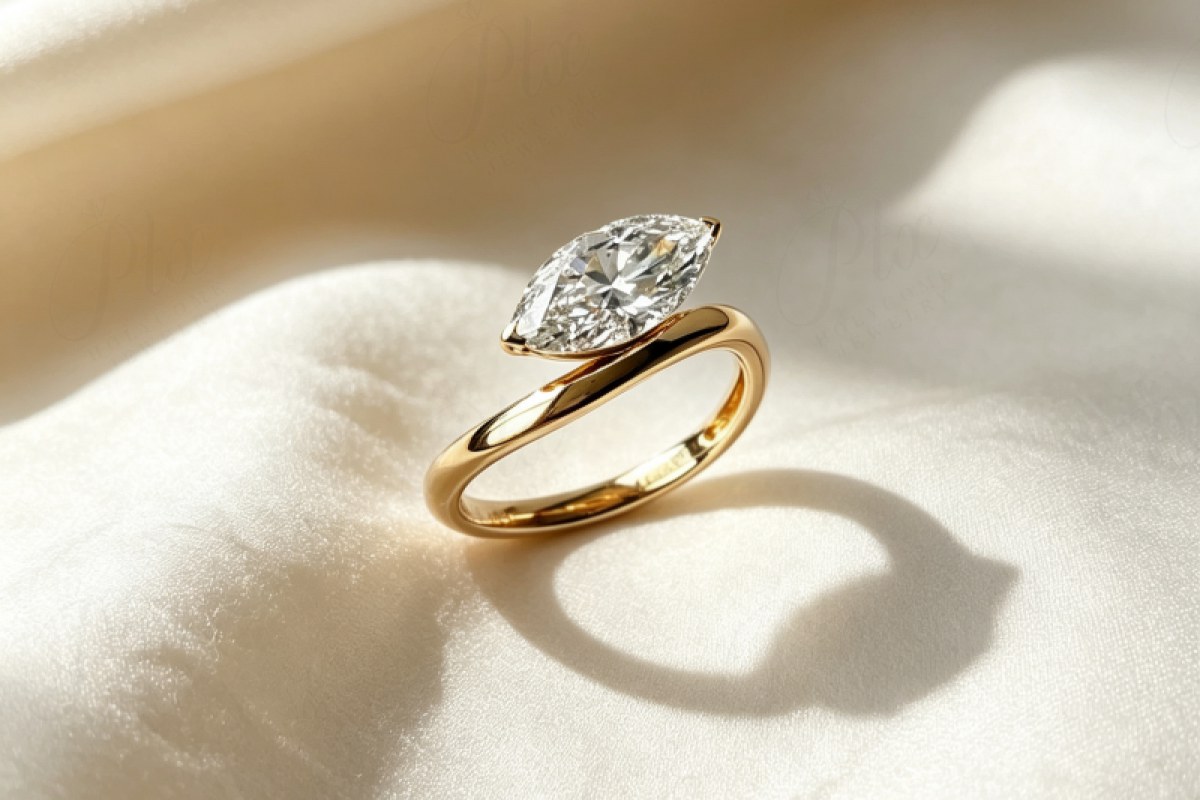
A chevron (V-shaped) band points upward toward the engagement ring. It is a fashion choice more than a functional one, and it pairs well with pear, marquise, or oval solitaires. It doesn't always sit perfectly flush, but the intentional gap looks stylish rather than accidental.
Buying the two rings together vs. separately
If you are still choosing the engagement ring, the easiest path is to buy a matching bridal set. The wedding band is designed specifically for that engagement ring, and the fit is guaranteed. Bridal sets often cost 10 to 20 percent less than buying the two rings separately, too.
If your engagement ring already exists, bring it to the jeweler when you try on wedding bands. This is non-negotiable. A band that looks perfect on a display finger may gap against your specific ring. Many online jewelers offer a free sizing loaner ring or a ring-molding service so you can send them the exact profile.
Width and metal choices that affect the fit
- Width: a 2 mm thin band is more forgiving than a 4 mm wide band, because it curves more easily around the setting. Wide bands need more precision.
- Metal: match the metal to your engagement ring. Wearing a white gold band next to a yellow gold engagement ring looks intentional if you like mixed metals, but the two metals wear at different rates and the softer one will scratch faster.
- Finish: a polished band shows gaps more than a matte or hammered finish. If a perfect flush fit matters to you, polished is the most demanding.
Resizing a shaped band later
One practical question people forget to ask: can a notched or contour band be resized? The answer is yes, but with limits. Sizing up or down by more than a half size can distort the curve of a shaped band, because the metal stretches and the notch or curve shifts out of alignment. If you think your finger size may change (post-pregnancy, weight loss, or you are buying far in advance), choose a simple straight band now and add a shaped band later once your size is stable. Most jewelers can also adjust a shaped band's curve when they resize it, but it costs extra and may not be perfect.
What if the band just won't sit flush?
Sometimes, no off-the-shelf band will fit your ring perfectly—especially with vintage, antique, or highly custom settings. In that case, a jeweler can custom-shape a band to your exact ring for a few hundred dollars extra. It is the difference between a ring that annoys you every day and one that feels like a natural extension of your hand.
Another trick: ring adjusters (tiny plastic inserts) can close a small gap temporarily, but they are not a long-term solution and they look sloppy under a setting that should fit. Invest in the right band instead.
Everyday tips for keeping the fit good
Over years of wear, the two rings can shift against each other and create tiny flat spots on the metal. Rotate them slightly every few months so the wear evens out. Once a year, have a jeweler check that both rings still sit flush and that the engagement ring's prongs are tight. A band that suddenly starts rocking usually means a prong is loose—get it checked immediately.
Budget-friendly flush options
You don't have to spend a fortune to get a flush fit. Many direct-to-consumer bridal brands offer matching contour bands for $150 to $400, which is far less than a traditional jewelry store. If you already own the engagement ring, buy a plain straight band first and try it at home. Most online jewelers have a 30-day return window, so you can test the fit in real life—typing, washing dishes, sleeping—before you commit. If there is a gap, send it back and order a contour or notched version. The cost difference between a straight and a shaped band is usually small, and the daily comfort difference is huge.
The bottom line
A wedding band that sits flush starts with understanding your engagement ring's profile. Solitaire? A straight or contour band will likely work. Halo or cathedral? Plan for a notched or shaped band. Bring the engagement ring to every fitting, buy the set together when you can, and don't accept a tiny gap as normal. The right band should disappear against your ring—you should feel the two rings as one, not two.
Related Posts
Written By
Jewelry Forum Hub Team
Gemologists and setters at our own workshop. We have been cutting moissanite and lab grown stones since 2013.