HOLYCOME EditorialOP
November 23, 2026 · 11 min read
Jewelry Trade Show Buying Tips Owner Forum
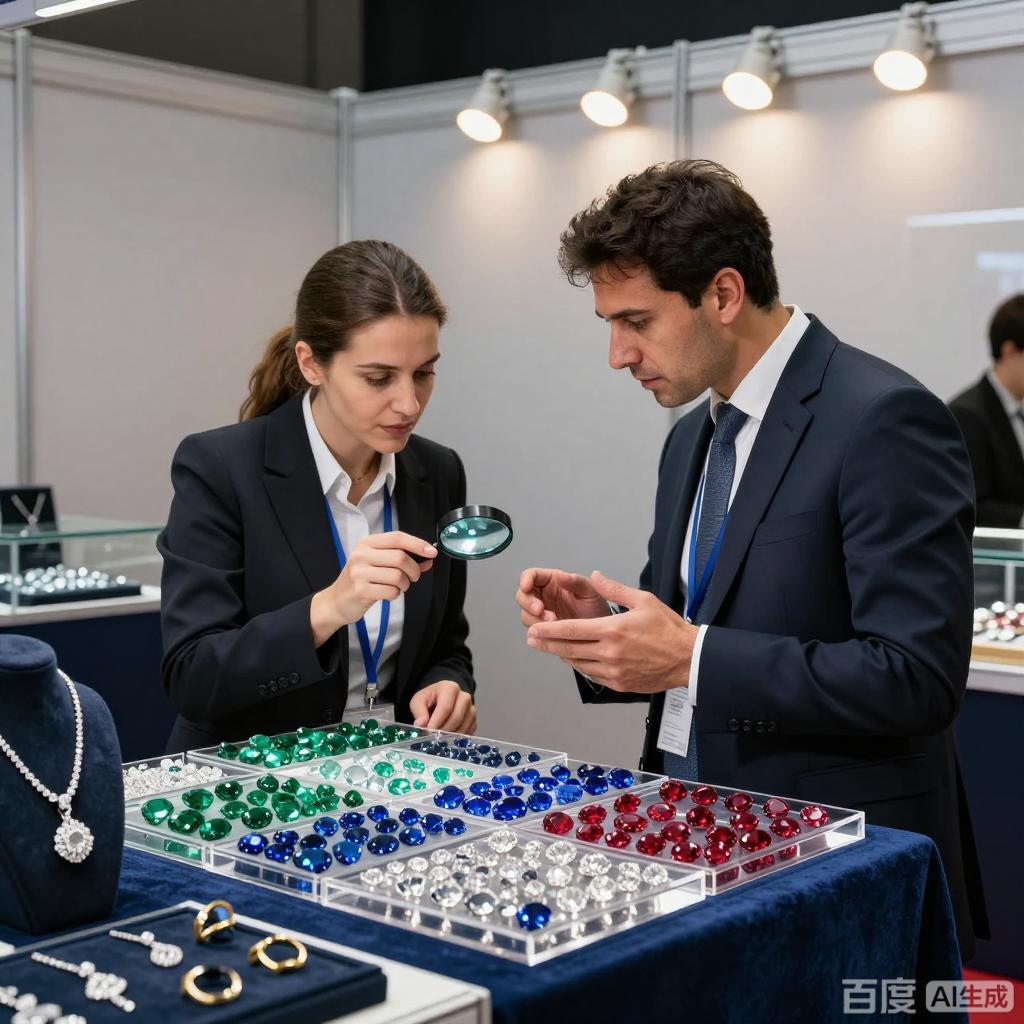
Every year thousands of independent jewelers and boutique owners walk JCK, AGTA, Hong Kong, Tucson, Vegas, Shenzhen, Vicenza, IJL, and dozens of regional jewelry shows trying to find new suppliers, see new product, compare pricing, and write orders. Forum threads about trade show buying are consistently some of the most-read on industry forums. First-time attendees burn a lot of cash and write a lot of regrettable orders. Veteran attendees walk in with a plan, a budget, a scoring system, and an exit strategy. This thread pulls together the real lessons from owners who have done dozens of shows: what to do, what to avoid, what questions to ask every supplier, and how to turn show orders into profitable inventory rather than dead stock.
8 replies in this thread
Before the Show: Prep Is 80% of the Win
Veteran buyers consistently say the work before the show matters more than anything you do on the floor. Owners who walk in cold with a budget but no plan leave with impulse buys, overbuy popular trends, and forget the staple categories they actually need.
Pre-show checklist from forum veterans:
- Audit your last 6 months of sales before registering. Pull sales by category, price point, metal, stone type, and margin. Know what your store actually sells before looking at shiny new merchandise. The classic first-show mistake is buying what you personally like rather than what your customers buy.
- Set a hard budget and split it. Allocate 60% to proven replenishment (pieces/styles/suppliers you already know sell), 25% to new similar styles that expand what you already move, and 15% max to experimental/trend items. Do not let a booth salesperson write an order bigger than the budget you came in with.
- Pre-register for buyer badges early. Big shows (JCK, HKTDC, AGTA Tucson) require business verification (business license, tax ID, sales permits, business card). Register 3-6 weeks in advance; on-site registration is more expensive and may be denied for first-timers.
- Pre-book appointments with key suppliers. Walk-up access works at smaller suppliers, but the busiest booths (top diamond dealers, high-end manufacturers) fill appointments weeks before the show. Email ahead to book 15-30 minute slots for your target suppliers.
- Download the show app and map the floor. Flag booths you need to visit and group them by section (loose stones on one aisle, finished jewelry in another, findings on another) to minimize backtracking. Expect to walk 6-10 miles per day at large shows.
- Set up vendor evaluation forms. A simple one-pager with fields for booth number, MOQ, lead time, payment terms, minimum reorder, quality notes, contact, and a 1-10 overall score—you will talk to 30+ suppliers in a day and will forget the second one by dinner. Take photos of business cards and sample pieces together.
Wear comfortable shoes. The single most-repeated advice on every trade show thread. No exceptions. You will walk all day for 3-4 days, and blisters at the end of day one ruin the entire show. Wear shoes you have already broken in for weeks.
Walking the Floor: Day One Strategy
Veteran buyers typically use day one for reconnaissance only, not for writing orders. Walk the entire floor, visit every booth you flagged plus adjacent aisles, collect cards and brochures, take notes and photos, and touch as much product as possible. Only after you have seen the landscape do you return to the top 5-8 suppliers on days two and three to write firm orders.
Impulse first-day orders are the #1 cause of post-show dead stock. The lighting is flattering, the booth design is beautiful, the salesperson is charming, and the pieces look better in a show booth than they will on your shelf under your store lighting. Sleep on it, come back fresh, and order with clear eyes.
Recommended daily plan for a 3-day show:
| Day | Focus | Activities | Orders |
|---|---|---|---|
| 1 | Reconnaissance | Walk floor, visit all target booths, collect info, take photos, note pricing, attend trend seminars, network at cocktail events | None (or only safe reorders with known suppliers) |
| 2 | Decisions | Return to top suppliers, compare similar lines side by side, negotiate terms, write main orders, arrange shipping | 70-80% of budget committed |
| 3 | Follow-up & show specials | Finalize orders, take advantage of last-day discounts (negotiate harder—suppliers would rather write a deal than ship inventory home), collect outstanding samples and catalogs | 20-30% remaining budget |
What to Ask Every New Supplier
A new supplier at a show may be your best source for years, or they may ghost you after you wire payment. These are the questions experienced buyers ask every time:
Credentials & Compliance
- Where is your factory? (City, not just "China" or "overseas") Do you own the factory or are you a trading company? Can I visit the factory?
- What quality certifications do you have (ISO 9001, BSI, RJC)? Are your products REACH-compliant for EU, FTC-compliant for US stamping and disclosure? (The FTC Jewelry Guides require accurate stamping and disclosure of metal content, diamond treatment, and origin claims.)
- Is your gold/silver ethically sourced? Do you have chain-of-custody documentation (RCoC for gold, Kimberley Process for rough diamonds)?
- What stamping do you put on pieces? Can I see sample stamps? (925/10K/14K/18K/PT950 stamps must be accurate; inaccurate stamping exposes you as the retailer to FTC liability.)
Commercial Terms
- What is your standard MOQ per style? Per order? For first-time buyers?
- What is lead time for stock items vs made-to-order? (Stock = ship within 1-2 weeks; made-to-order = 3-6 weeks typical; custom = 4-8+ weeks typical)
- What payment terms do you offer new accounts? Wire in advance? 30% deposit / 70% before shipping? Net-30 after establishing history?
- What is your defective/damaged goods policy? Who pays return shipping on defective items?
- What is your minimum reorder quantity after the first order? (Good suppliers drop reorder MOQs significantly for established accounts.)
- Do you offer drop shipping? Consignment? Memo goods? (Memo is rare from overseas suppliers but common for domestic dealers.)
Quality & Customization
- What quality control steps do you use? (Visual inspection, stone setting test, tarnish test, nickel release test, plating thickness measurement? For reference, ISO 9001 quality systems are documented at the ISO 9001 overview.)
- Do you offer private labeling? Can you laser-engrave my logo on pieces? Custom packaging?
- Can I specify stone quality (clarity, color, cut grade)? Do you provide IGI/GIA certificates for stones above a certain size?
- How do you handle sizing rings? Is sizing included in the price?
- What plating thickness do you use for rhodium/gold plate? (Thin plate below 1 micron wears off in weeks; premium plate is 2+ microns.)
Ongoing Relationship
- Who is my account rep, and how do I reach them after the show? (Get direct phone and email—not just a generic info@ address.)
- What is your response time on emails/quotes? (If they cannot answer emails within 48 hours during the show relationship, they won't be faster later.)
- Do you have a catalog online? Where do I see new releases after the show?
- Do you attend this show every year? (Suppliers who invest in annual booths are generally more stable than one-show pop-ups.)
Red Flags to Walk Away From
Forum veterans consistently cite these supplier red flags:
- Pricing that seems too good to be true. If one booth is selling "14K gold" pieces at 30% below everyone else at the show, it is either under-karat, plated, or the seller is disreputable. There is no secret cheap source for 14K gold at a trade show.
- Pressure to write an order NOW. "This show special ends today!" is a sales tactic. Good suppliers will honor show pricing for a week or two after if you ask; pressure is a sign they know their value drops once you compare them to alternatives.
- Vague answers on factory location. If they say "we have partners overseas" instead of naming a city or showing factory photos, they are probably a trading company marking up someone else's product—not necessarily bad, but you should know who you are buying from.
- No business card or only a Gmail/Hotmail email. Legitimate manufacturers and established wholesalers have company emails, websites, and printed materials with addresses. A person at a booth with only a personal email and no catalog is either very new or not a serious supplier.
- Won't put quality guarantees in writing. If they will not confirm metal content stamping, return policy, or defective goods policy in a written PO, walk away.
- Asking for full wire payment before production for a first order with no track record. 30% deposit to start production + 70% after QC photos/inspection is standard. 100% upfront to an unknown supplier is risky.
Negotiation That Actually Works
Suppliers at trade shows are more open to negotiation than they will be via email two weeks later—they are invested in the show, have sales targets, and would rather write an order than walk away empty. Forum tips on effective (non-offensive) negotiation:
- Negotiate terms before price. Better payment terms (Net-30 instead of prepay), lower MOQ, free sizing, free logo engraving, included display/packaging, faster lead time, or free shipping often move more dollars than a 5% price cut.
- Consolidate orders for leverage. If you are ordering from 6 categories with the same supplier, ask for a volume discount across the combined order rather than haggling per item.
- Ask for show specials on the last day. Sunday/last-day specials are real; suppliers would rather discount than carry inventory home. Ask politely: "I'm finalizing my show orders today—what can you do on the order total if I confirm this now?"
- Be specific about what you need. Instead of "can you do better on price?" say "My budget for this category is $X per piece at Y units. Can we hit that?" Specific numbers get concrete responses.
- Don't nickel-and-dime on small orders. Fight hard on a $50,000 order. Be a reasonable partner on a $500 first-time sample order. Suppliers remember how you treated them on small orders when you grow into big orders.
After the Show
A lot of post-show value is lost in the two weeks after you get home. Follow-up discipline is what separates profitable show buying from wasted trip cost:
- Within 48 hours of returning home: organize all business cards, notes, and photos by supplier. Flag which orders you wrote vs which you need to follow up on vs which you decided not to pursue.
- Within one week: send a personal follow-up email to every supplier you had a meaningful conversation with, confirming orders, requesting proforma invoices, and attaching any custom design specs. Attach your business license/tax ID so they can set up your account.
- Record all PO numbers, deposits, expected ship dates, and contact info in your inventory/POS system before you lose the paperwork.
- When goods arrive: inspect every piece against the PO. Count units, verify metal stamping, check stones for chips/cracks, check plating, confirm sizing. Do not pay the 70% balance before seeing QC photos or inspecting the goods.
- Tag and display new merchandise within 48 hours of receiving it. New product moves fastest in the first 30 days; boxes sitting in a back room lose freshness and margin.
- Track sell-through for 90 days after a new line arrives. Use that data to decide which suppliers to reorder from next season and which to discontinue.
Frequently Asked Questions
Q: Are big shows like JCK/HKTDC worth the cost for a small boutique?
It depends on your volume. If you place under $10,000/year in wholesale orders, the travel, hotel, badge, and time cost of large national/international shows likely is not worth it—regional shows and direct online wholesale may be more efficient. Above $50,000/year in wholesale purchasing, national shows are usually worth it for the selection, comparison, and relationship-building.
Q: How do I avoid ordering too much of the wrong thing?
Use the 60/25/15 budget split (replenishment/new similar/experimental), sleep on all first-day decisions, bring your POS sales data with you, and ask every supplier what their reorder MOQ is. Styles that sell can be reordered; dead stock you cannot return. First orders in new styles should be small.
Q: Should I buy from Chinese manufacturers at international shows?
Many of the most reliable silver and fashion jewelry manufacturers in the world are based in China (particularly Shenzhen/Guangzhou for fashion jewelry and watches, Yiwu for mass-market findings). Many reputable US and European brands manufacture there. The question is not the country—it is the individual supplier: ask for certifications, visit the factory if possible, place small sample orders first, and never wire 100% upfront.
Q: How do I tell if a gemstone treatment has been disclosed properly?
Ask explicitly for treatment disclosure on every colored stone and diamond. The FTC requires disclosure of all treatments that affect value (heating, oiling, fracture filling, irradiation, coating, HPHT, laser drilling). Reputable dealers disclose this on the invoice; GIA/AGTA guidelines are the standard reference. If a supplier hesitates or says "it's natural, no treatment" on every stone, verify independently for expensive pieces. The GIA gem treatment reference lists standard disclosure practices.
Q: What is memo, and should I use it?
Memo (memorandum) means a supplier loans you goods that you only pay for once you sell them; unsold goods are returned after a set period (typically 30-90 days). It reduces your risk but usually comes with higher per-piece cost and stricter handling requirements. Memo is common from domestic diamond dealers and high-end bridal suppliers; it is rare from overseas manufacturers.
Q: How do I avoid having samples look better than the bulk order?
This is a real risk. Some suppliers make showroom samples with premium quality and ship production runs with looser quality. Protect yourself: take photos of the exact samples you approved at the booth, include quality requirements in writing on the PO (stone grade, metal stamping, plating thickness, finish), ask for pre-shipment QC photos, place a small first order before a large buy, and inspect every shipment when it arrives.
Trade shows remain one of the fastest ways to build a supplier network, compare products side-by-side, and see new trends early. The owners who do well come prepared, walk the floor before buying, ask the right questions, and follow up methodically after they get home.
Related Reading
- Sterling Silver Jewelry Care Owner Tips Forum - HOLYCOME
- Lab Grown vs Natural Diamond Owner Forum Discussion - HOLYCOME
- Moissanite Owner Experiences Real Talk Forum - HOLYCOME
Related reading: Jewelry Business Owner Forum: Wholesale Buying, Sterling Silver Jewelry Care Owner Tips Forum, Jewelry Trade Show Preparation Guide.
Join the thread. Ask a sizing, setting or sourcing question and the bench answers.
Post a questionWritten By
HOLYCOME Editorial
Gemologists and setters at our own workshop. We have been cutting moissanite and lab grown stones since 2013.