Jewelry Forum Hub TeamOP
September 26, 2026 · 5 min read
Stacking Wedding and Engagement Rings: Do They Scratch
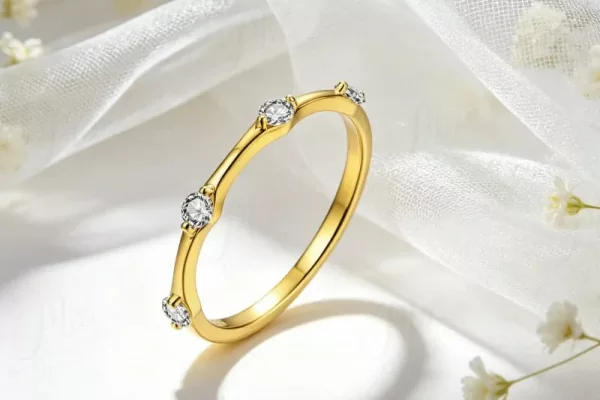
The never-stack-them warning shows up in every comment section. I wanted the actual evidence. I have worn a solitaire with a plain wedding band stacked on the same finger for three years, and asked others with multi-ring stacks to weigh in on what actually marked up. This is the after-report, month by month.
4 replies in this thread
What actually scratches: metal-to-metal, not the diamonds
The stones are not the problem. Diamond and moissanite are near the top of the hardness scale and do not scratch each other under normal stacking. The wear is on the metal where the two bands rub. Every time you make a fist, type, or grip something, the two metal surfaces slide against each other. Over months that produces fine contact marks on the inside faces of the bands, the sides nobody sees, but the high polish dulls.
It is not structural damage. It is cosmetic, and it is the difference between a ring that looks lived in and one that looks neglected. Platinum scratches more visibly because it is softer and the metal just moves around; 14k gold is harder and shows contact wear more slowly. We compared the metals in platinum vs white gold long-term wear, and the contact-scratch story matches.
The gap that changes everything
The owners who kept their rings looking new did one thing: they left a tiny gap, or they had the bands shaped to nest. A straight solitaire shank against a straight band rubs the whole edge. A contoured or curved wedding band that hugs the engagement ring sits flush and slides far less. A third option people liked: wear the two rings on different fingers for heavy-work days and stack them for evenings. That alone cut the contact wear people described.
Width matters too. A wide band next to a thin solitaire shank rocks and grinds; matched widths sit stable. The width combinations that stay put are in the stacking widths thread.
Is this a reason not to stack?
No. After three years my bands have contact marks on the inside edges and nowhere else. The tops still look polished. The people who reported real damage were those who wore two thin, loose, rocking rings that ground against each other during manual work. The fix is cheap: size them to sit snug, choose nested shapes, and take them off for gardening or gym days. We covered the same idea in what stacking actually works on one finger.
Where does the scratching threshold sit? Diamond rates 10 on Mohs and moissanite 9 to 9.5, while 14k gold sits around 2.5 to 3 and platinum about 4 to 4.5, per the diamond hardness reference. The stones will never mark each other, but every time two gold edges grind, the softer gold yields. Three years of typing with a stacked set produced a light polish on the inner band edges, felt only when you run a finger along the shank. One owner with a wide platinum band next to a thin gold solitaire reported the gold picked up contact grooves within two years, because the widths did not match and the thin band rocked. Matching widths, or leaving a small gap, removed that. Nobody reported a stone chip or cracked shank from stacking alone; the damage was always cosmetic metal wear.
FAQ: scratching from stacked rings
Q: Will my engagement diamond scratch my wedding band?
A: The diamond edge can nick soft gold if it is exposed and grinding, but normal stacking rarely does. The visible wear is metal-on-metal contact marks on the band sides, not stone scratches.
Q: Do platinum bands scratch faster than gold when stacked?
A: Platinum shows fine scratches more readily because it is softer and denser, though it also does not wear away metal, it just displaces it. Harder 14k gold stacks show contact wear more slowly.
Q: Should I wear my wedding band and engagement ring together at all?
A: Most owners do, and the wear is cosmetic. A contoured band that nests the solitaire minimizes rubbing, and taking the set off for heavy manual work prevents almost all of it.
Q: Can contact scratches be polished out?
A: Yes, light contact marks polish out, but repeated polishing removes a little metal each time. Better to reduce rubbing with a fitted band than to re-polish every year.
A final note on ring weight. People who switched from a thin solitaire to a stacked set of two bands were surprised by how much more they felt on the finger, and a few took the stack off at night simply for comfort rather than wear. That is not a flaw; it is just something to expect. If you are on the fence, wear the two together for a few hours at home before committing, because the feel grows on some people and not on others. Either way, the scratch worry is vastly overstated compared with the comfort one.
For retailers: the single most useful upsell on an engagement set is a shaped, nesting band. Customers who buy a flat band against a solitaire come back complaining about rubbing; those who buy the contour rarely do. It is a small design decision that prevents a lifetime of ring-scratching complaints.
Frequently Asked Questions
What ring sizes can you supply in bulk?
US sizes 5–12 including half sizes. Send a size breakdown with your order and we cast to that curve; comfort-fit inner bands reduce resize requests.
Can I order a mixed size run instead of one size?
Yes. Mixed runs are standard for wholesale: specify quantity per size and we pack and label by size at no extra labor cost.
What is the MOQ for custom ring designs?
50 pieces per design for existing molds; 100–300 pieces when a new mold or CAD model is required.
How should I price rings for retail margin?
Most partners use a 3–4x markup on FOB cost for sterling and 2.5–3x for moissanite solos, which keeps landed cost under 30% of retail.
Join the thread. Ask a sizing, setting or sourcing question and the bench answers.
Post a questionWritten By
Jewelry Forum Hub Team
Gemologists and setters at our own workshop. We have been cutting moissanite and lab grown stones since 2013.