HOLYCOME EditorialOP
November 18, 2026 · 6 min read
Moissanite Wholesale MOQ Planning: How Many SKUs to Start

8 replies in this thread
The mistake I see on almost every first purchase order
I have spent twelve years on the QC bench, and the pattern is always the same. A new retailer sends over a spreadsheet with forty or fifty ring styles, two pieces each, and expects to look like a full assortment on day one. Three months later the best three styles are sold out, the other forty are dust collectors, and the buyer has no cash left to restock the winners. That is not a buying problem. It is an MOQ planning problem, and it starts before anyone picks a stone.
Our moissanite wholesale terms are simple: one piece minimum on stock items, thirty pieces on custom designs. The number of SKUs you should open with is a separate question, and it has more to do with your reorder cycle than with how many designs you find attractive.
Start with 12 to 18 SKUs, not 40
For a small retailer opening a moissanite case for the first time, I recommend 12 to 18 active SKUs. That range gives you enough visual variety to look like a real collection while keeping your capital concentrated in pieces that can actually turn. Anything past 20 SKUs on a first order usually means you are buying shelf space instead of sell-through.
Break that number down before you pick a single design:
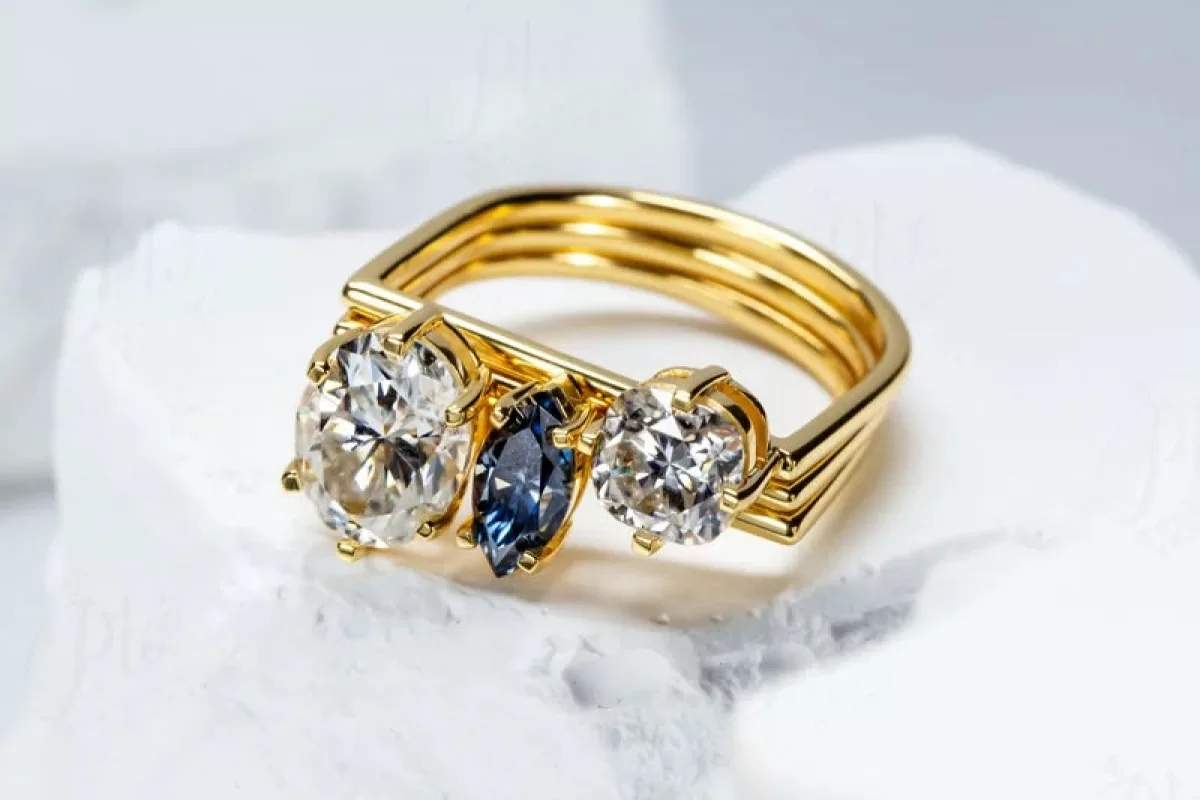
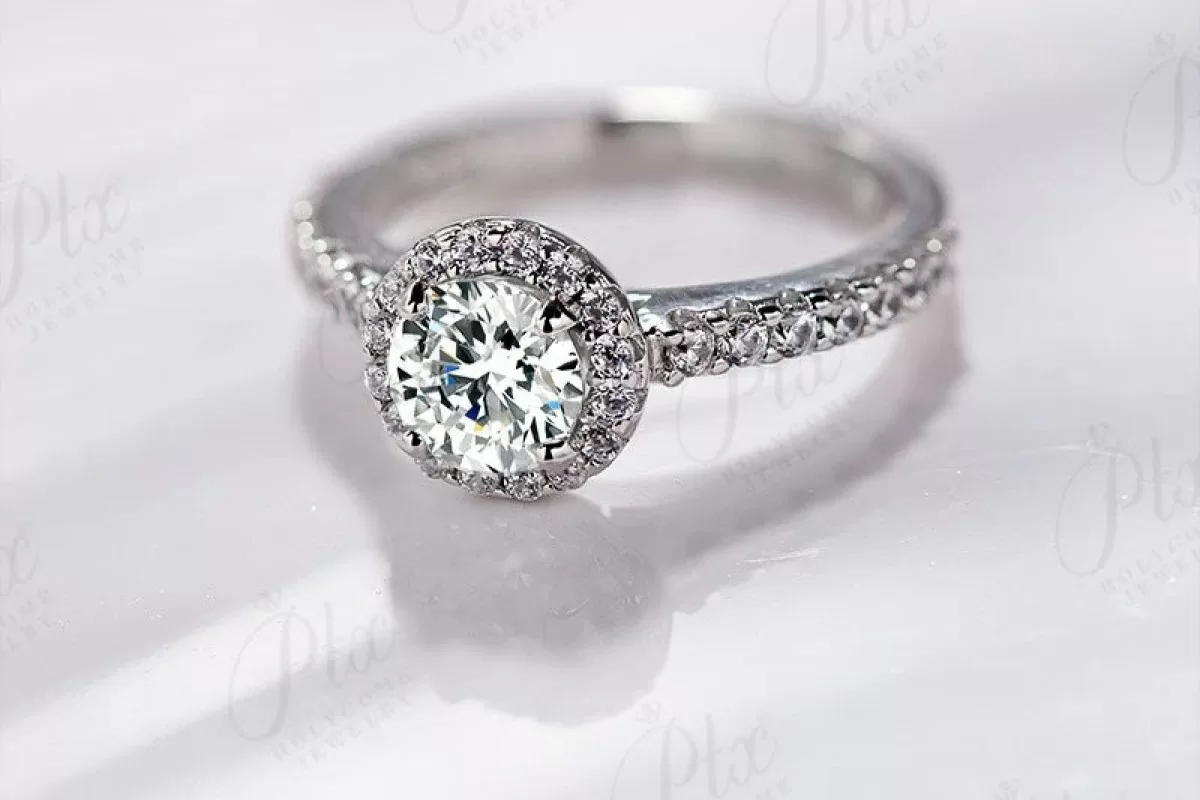
- Four to six solitaire or simple side-stone engagement styles in round and oval, since those carry the most search volume.
- Two or three three-stone or hidden halo pieces as a step-up price point.
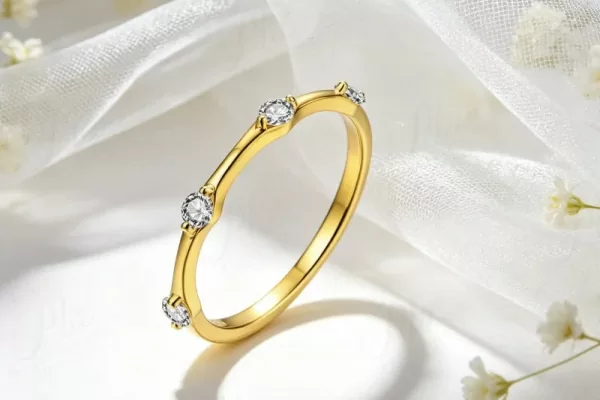
- Two or three bands, stackables or men's styles for add-on sales at checkout.
- Two or three fashion or pendant pieces to test a second category without committing budget.
- One or two hero pieces in a larger carat weight for the display case.
That structure keeps you under twenty SKUs and still covers the buying patterns most walk-in customers arrive with.
Why depth beats breadth at the MOQ stage
Here is the math buyers usually skip. If you spend the same budget on eighteen SKUs at three pieces each, you hold 54 units. Spread the identical budget across forty SKUs at two pieces each, and you hold 80 units but only 2.0 units per style. When your top style sells four in the first month, you are out of stock on the item that pays your rent.
Depth also protects your display. A case with three sizes of the same ring reads as a real jeweler. A case with one of everything reads as a sample table, and customers hesitate to buy the only piece on the tray.
| Opening order size | Typical SKU count | Units per SKU | Main risk |
|---|---|---|---|
| Micro test | 6 to 10 | 2 to 3 | Looks thin, limited price ladder |
| Recommended start | 12 to 18 | 3 to 4 | Manageable, needs quick reorder |
| Aggressive launch | 25 to 35 | 2 to 3 | Cash tied up in slow movers |
| Custom program | 3 to 6 | 30 plus | Only works with proven winners |
Stock versus custom: where MOQ actually bites
Most of your opening order should come from stock. One piece minimum means you can test a shape or a setting for the price of a single unit, and stock ships fast because the stones are already cut and the settings already cast. Custom is where the thirty-piece minimum applies, and that minimum exists for a real reason: a new CAD file, a new wax print, and a fresh casting run all cost the same whether you order thirty pieces or three hundred.
So do not open with custom. Build your first eighteen SKUs from stock, watch which three or four sell, then convert those winners into a custom run with your own mark, your own sizing curve, or a tweaked head. By that point you are spending the thirty-piece minimum on a design the market has already approved.
Lead times you can plan a reorder around
Production on custom moissanite runs 12 to 18 days from approved CAD, and stock orders move faster since nothing needs to be made. Delivery is DDP, typically 5 to 8 days to a US or EU address, so your door-to-door window on a custom reorder lands around three to four weeks. Plan your SKU count so that your fastest seller can be replenished inside one selling month.
Payment follows the same logic. Samples go through PayPal so you can hold the piece in your hand before committing, and bulk orders run on T/T with a 30 percent deposit. That split lets a small retailer verify quality on a single ring and then place a real order with confidence.
If you cannot restock your best SKU within four weeks, you have too many SKUs and not enough depth.
Cut SKUs where the certificate cost outweighs the sale
Every moissanite above 0.30 ct that leaves our floor carries a GRA card, and larger or higher-value stones can be paired with an IGI report. Certificates are not free, and on a 200 USD pendant the paperwork can eat a meaningful slice of margin. When you plan SKUs, keep the certified pieces for your engagement and bridal slots where buyers expect documentation, and let small fashion items ride on the GRA card alone.
Our cost, speed and yield typically run about 20 percent better than a typical trading company, and the reason is boring: we cut, set, polish and QC under one roof. No middle layer marks up the stone, no second factory re-handles the setting, and no third party sits between you and the bench. That is also why we can hold a one-piece stock minimum without losing money on it.
Three-stage QC and why it affects your SKU count
Incoming stone check happens before anything is set, so a bad batch of melee never reaches a ring. In-process inspection catches prong and setting faults while the piece is still on the bench. Pre-ship AQL sampling runs against your order before it is boxed. That sequence matters to a small retailer because a single defective hero piece in an eighteen-SKU order is a much bigger percentage problem than one defect in a two-hundred-SKU order.
Fewer SKUs, tighter QC, faster reorder. That is the whole strategy in one line.
Frequently Asked Questions
What is the minimum order for moissanite wholesale?
Stock items start at one piece, so you can sample a design before scaling. Custom designs carry a thirty-piece minimum per style because of CAD, casting and setting setup. Most small retailers open with twelve to eighteen stock SKUs and move to custom once a style proves itself.
How long does production and delivery take?
Custom production runs 12 to 18 days after CAD approval, and stock orders ship sooner. DDP delivery takes about 5 to 8 days to the US or EU, so plan roughly three to four weeks door to door on a custom reorder.
How is pricing worked out?
Price depends on metal weight, stone carat and grade, setting complexity, and order quantity, quoted per SKU rather than as a flat rate. Sample orders can be paid by PayPal, and bulk orders run on T/T with a 30 percent deposit.
Send your target SKU list and quantity per style to service@holycome.com or message WhatsApp +86 133 7744 7107, and I will come back with a quote plus a sample plan that fits your budget and your reorder cycle.
Join the thread. Ask a sizing, setting or sourcing question and the bench answers.
Post a questionWritten By
HOLYCOME Editorial
Gemologists and setters at our own workshop. We have been cutting moissanite and lab grown stones since 2013.