Buying Guides
How to Read a Moissanite Listing for Red Flags

Moissanite is a great value, but the market is full of listings that range from excellent to outright misleading. A product photo can make any stone look brilliant, and the price can tempt you into clicking "buy" before you read the details. The difference between a ring that dazzles for years and one that turns out to be dull, tinted, or poorly made usually shows up in the listing text, if you know what to look for. This guide teaches you to read a moissanite listing like a skeptic and spot the red flags before you spend a dollar.
Why listings need careful reading
Moissanite quality is not uniform. Reputable brands produce near-colorless, well-cut stones with certificates, while cheaper suppliers sell stones that are tinted, unevenly cut, or misrepresented. Because the stone is small and often set in a ring, buyers rarely inspect it before delivery. The listing is your only chance to judge it, so treat the words as carefully as you would a contract.
Red flag 1: No stone brand or certificate
The biggest trust signal in moissanite is the brand and any accompanying certificate or warranty card. Established moissanite producers stand behind their stones with known branding and documentation. If a listing says nothing about who made the moissanite or offers no certificate or warranty card, treat the quality as unknown. Reputable sellers name the brand openly; vague "premium moissanite" claims are a warning.
Red flag 2: Vague color claims
Moissanite naturally carries faint tones, and different grades look very different in person. Watch for listings that say only "colorless" or "brilliant white" without specifying a grade. Real near-colorless moissanite should be described with a clear grade. A listing that over-promises perfect color may be hiding a stone that looks warm or faintly green in larger sizes.
Red flag 3: "Diamond" wording designed to confuse
Some listings stretch language to make moissanite sound like diamond. Phrases like "diamond-like," "looks identical to a diamond," or even accidental-looking uses of the word "diamond" in the title can mislead. There is nothing wrong with moissanite, but a seller who is not honest about what the stone is will likely be loose about other details too. The listing should clearly say moissanite.
Red flag 4: Impossible pricing
Moissanite is affordable, but it is not free. If a listing offers a 2-carat equivalent moissanite in a solid 14k gold setting for a price that seems far below every other seller, question it. The "gold" may be plated over base metal, or the stone may be a cheap simulant rather than real moissanite. Compare across several sellers; if one price is an outlier downward, something is usually cut.
Red flag 5: No return policy or a tiny window
If the listing does not link to a clear return policy, or offers fewer than 14 days with restocking fees, be cautious. A seller confident in its moissanite will let you inspect the ring at home and return it if the color or cut disappoints. A seller who makes returns hard knows the product may not measure up.
Red flag 6: Stock photos only
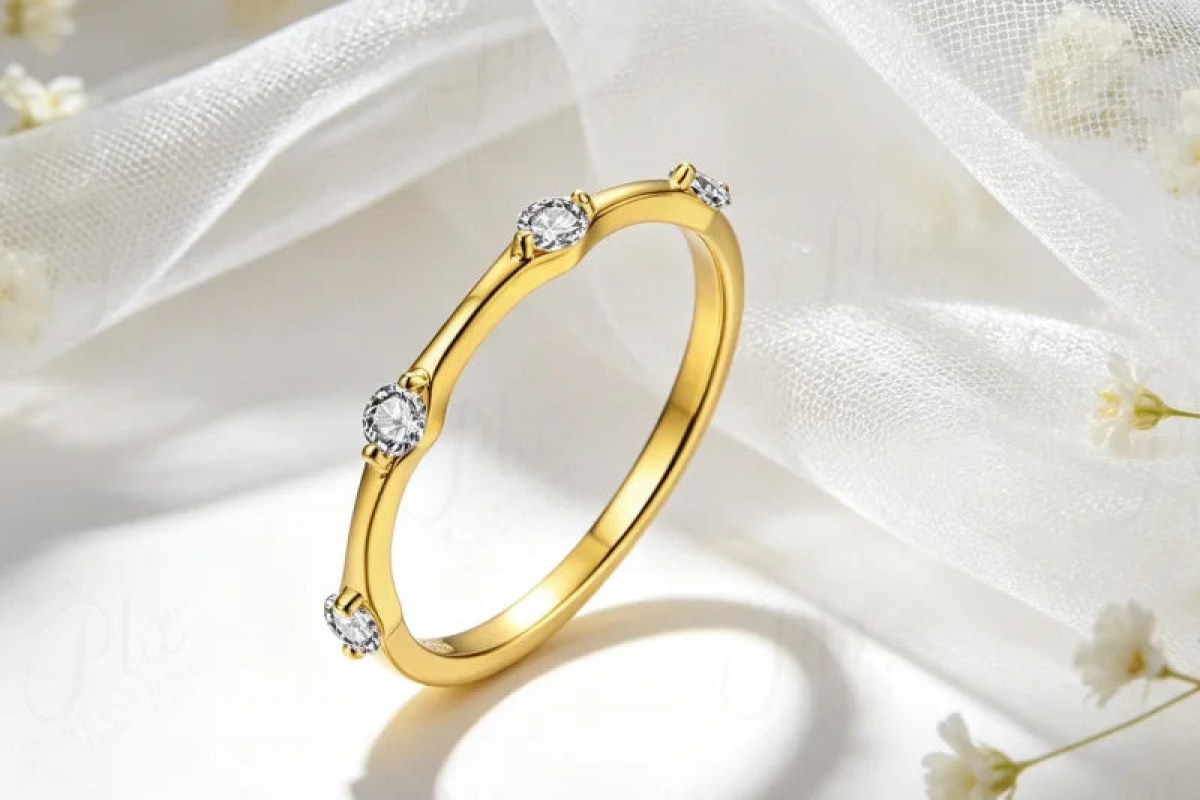
Professional studio photos can hide imperfections. Look for listings that include real customer photos, videos, or close-ups of actual stones. If every image is a glossy render and there are no verified reviews with pictures, you have no way to judge the real product. Reviews matter: look for repeated comments about the stone looking too yellow, prongs feeling flimsy, or plating fading.
Red flag 7: Missing metal details
A ring's durability depends on its metal. Listings that say "gold tone" or "silver" without stating karat (14k, 18k, platinum) are hiding something. Solid gold, gold-plated, and gold-filled are very different products with very different lifespans. The listing must specify the exact metal and karat. If it does not, ask before you buy and watch how they respond.
Red flag 8: No warranty for stones and prongs
Moissanite is durable, but settings loosen over time. A good seller offers a warranty covering loose stones, broken prongs, and often free prong tightening. A listing with no warranty at all means you bear the risk if a stone works loose and falls out. A clear, written warranty is a sign of quality and confidence.
What a trustworthy listing looks like
Combine the checklist: a named moissanite brand, a stated color grade and certificate, clear metal karat, realistic pricing, a 30-day return window, real customer photos, and a written warranty. When you see all of those, you can buy with confidence. If two or three red flags stack up in one listing, keep shopping. There are plenty of honest sellers; you do not need to gamble on the uncertain one.
Questions to ask the seller before you buy
If a listing is missing details, do not guess; ask. A reputable seller will answer quickly and specifically. Send a short message asking which brand of moissanite is used, what color grade it is, what exact metal and karat the band is, and how the return and warranty work. Watch the response: detailed, written answers with numbers are a good sign. Evasive answers like "it's great quality, don't worry" are exactly what you are trying to avoid. You can learn more in two minutes of chat than in twenty minutes of staring at product photos.
Trust the pattern, not a single clue
No single missing detail automatically means a listing is dishonest. A seller might forget to state the metal karat in the description but answer your email immediately with a certificate. The red flags matter when they stack up: no brand, no certificate, vague color, impossible price, stock photos only, and a short return window all together. If you ask three reasonable questions and get vague answers for all three, walk away. There are honest sellers offering the same ring with a fraction of the risk.
When in doubt, choose the seller who is easiest to return to. The best listings are almost boringly honest: they state the brand, the grade, the metal, and the policy in plain words, without superlatives. That honesty, more than any sparkle in the photo, is your guarantee of a ring you will be happy to wear.
The bottom line
Reading a moissanite listing is a skill. Look for a named brand and certificate, a specific color grade, honest "moissanite" wording, realistic pricing, a fair return policy, real customer photos, exact metal details, and a written warranty. If any of these are missing, ask questions or move on. A few minutes of careful reading now saves you from receiving a ring that disappoints you later.
Related Posts
Written By
Jewelry Forum Hub Team
Gemologists and setters at our own workshop. We have been cutting moissanite and lab grown stones since 2013.