Holycome Trade DeskOP
November 24, 2026 · 8 min read
Earrings Wholesale: custom OEM
8 replies in this thread
Custom Earrings for Wholesale Buyers: How the OEM and Private Label Workflow Works
Custom earrings from an OEM partner typically move through a five-stage workflow: design brief, sampling, approval, bulk production, and DDP delivery to the US. For stock styles the minimum order is 1 piece, which lets you test a design before committing; custom work starts at 30 pieces. Sampling takes 7 to 10 days, bulk production runs 15 to 25 days after approval, and DDP shipping to the US adds 5 to 8 days.
Understanding each stage helps you plan inventory, launch dates, and cash flow with fewer surprises.
OEM Versus Private Label: Choosing the Right Model for Earrings
The first decision a wholesale buyer faces is whether to pursue full OEM or private label. These terms are often used interchangeably, but they describe different levels of involvement and different cost structures.
Full OEM: Built to Your Specification
With OEM, you supply a design brief, reference images, or a technical drawing, and the factory produces earrings to that specification. You control the stone size, the metal, the setting style, and the finishing. OEM suits buyers who have a defined brand aesthetic and expect reorder volumes. The 30-piece minimum per style keeps entry costs manageable while protecting factory margins on a made-to-order run.
Private Label: Branding Existing Designs
Private label means selecting from existing stock styles and applying your brand elements, such as logo cards, branded pouches, or custom packaging inserts. Because the earrings already exist as stock styles, you can start with a 1-piece minimum to evaluate quality before scaling. This model shortens time to market dramatically, since sampling can be skipped for the product itself and focused only on branding materials.
Which Model Fits Your Business Stage
Newer resellers often start with private label to validate demand, then move winning designs into OEM custom runs once they see consistent sell-through. Established retailers with seasonal collections tend to run OEM programs on a set calendar, ordering 30 or more pieces per style across a coordinated range. Either path uses the same factory infrastructure; the difference is where your money and attention go during development.
Stone and Metal Decisions That Shape Your Earrings Program
Two specification choices dominate any earrings brief: the stone and the metal. Both affect price, perceived value, and how you are allowed to market the finished product.
Moissanite as a Diamond Alternative
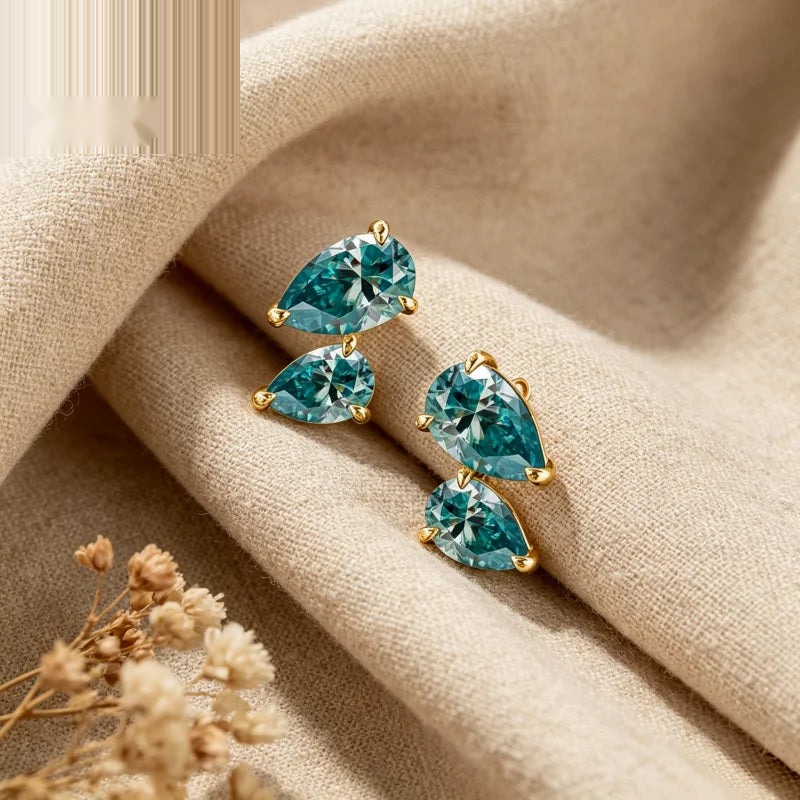
Moissanite is a lab-created diamond alternative with high brilliance and strong durability for daily wear. It is not a natural diamond and should never be described as one in your listings or packaging. Graded stones are supplied with GRA or IGI papers, which give your product pages independent documentation of stone characteristics. When you brief an OEM design, specify carat size per stone, since loose stones are priced by the carat and larger center stones change the per-piece cost significantly.
Metal Options and Honest Marketing Language
Your metal choice must be named accurately in all marketing. The available options are 925 sterling silver, 10K, 14K, or 18K solid gold, gold vermeil, and gold plated finishes. Vermeil and plated pieces are not solid gold, so terms like "solid gold" cannot appear in their descriptions. For earrings specifically, sterling silver posts are a common choice for sensitive ears, and many buyers pair a sterling silver base with a plated finish to balance cost and wearability.
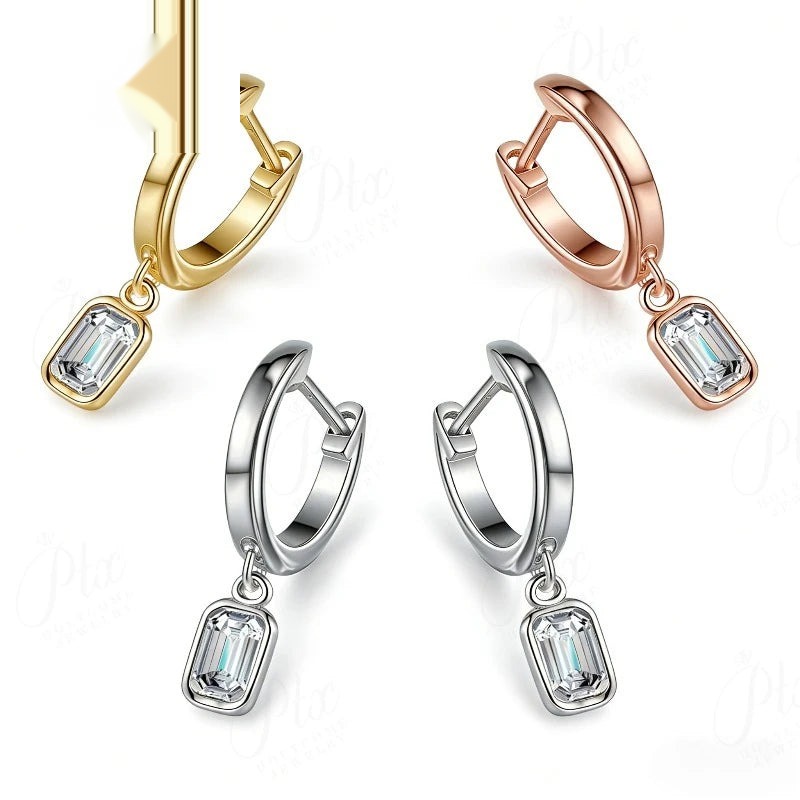
Confirm post material and closure type (studs, huggies, hoops, drops) during the brief stage so samples reflect the final construction.
How Pricing Is Quoted
Pricing is quoted per piece for finished earrings and per carat for loose stones. A custom OEM run combines both: the metal and labor are calculated per piece, while the specified stone weight is calculated per carat. Sample orders are typically paid through PayPal, while bulk orders use T/T with a 30 percent deposit and a 70 percent balance before shipment.
Budgeting the deposit at order confirmation and the balance at pre-shipment keeps your cash flow predictable across the 15 to 25 day production window.
The Custom Earrings Workflow: Stage by Stage
A clear picture of the timeline helps you plan launches and avoid stockouts. Below is how a typical custom run unfolds from first contact to delivered goods.
| Stage | What Happens | Typical Duration |
|---|---|---|
| Design brief | Specs, stone size, metal, branding shared | Buyer controlled |
| Sampling | Prototype earrings made for review | 7 to 10 days |
| Approval | Buyer signs off on sample details | Buyer controlled |
| Bulk production | Full run of 30 or more pieces | 15 to 25 days |
| QC and shipping | AQL inspection, then DDP to the US | 5 to 8 days transit |
From approved sample to goods in your warehouse, plan on roughly three to five weeks. If your launch date is fixed, work backward from that date and allow buffer time for sample revisions, since each revision round adds days to the sampling stage.
Building a Useful Design Brief
The quality of your samples depends on the quality of your brief. Include reference images with notes on what you want changed, the exact metal (for example, 14K solid gold versus gold vermeil), stone carat weights, closure type, and any branding requirements. Ambiguity in the brief is the most common cause of revision rounds, so specify dimensions in millimeters where possible. A written brief also protects you if a design detail is questioned later in production.
Reviewing Samples Before Bulk Production
When your sample arrives in 7 to 10 days, evaluate it against the brief on four points: stone security in the setting, post alignment and closure function, plating or metal finish consistency, and overall weight and wearability. Approve only when each point matches your specification, because bulk production replicates the approved sample. Changes requested after approval mean a new sampling cycle and a new timeline.
Quality Control and Documentation for Wholesale Earrings
Consistency across a 30-piece run matters more to a retail buyer than any single showcase piece. A three-stage QC process addresses this at each phase of production.
The Three-Stage QC Process
Quality control happens at three points: incoming inspection of materials and stones, in-process checks during setting and assembly, and a pre-shipment AQL inspection on finished goods. The pre-ship AQL inspection is the one that matters most to your reorder decision, because it samples the finished batch against acceptance limits before the balance payment is due. Ask for inspection records with your shipment so you can trace any issue back to a specific stage.
GRA and IGI Papers for Graded Stones
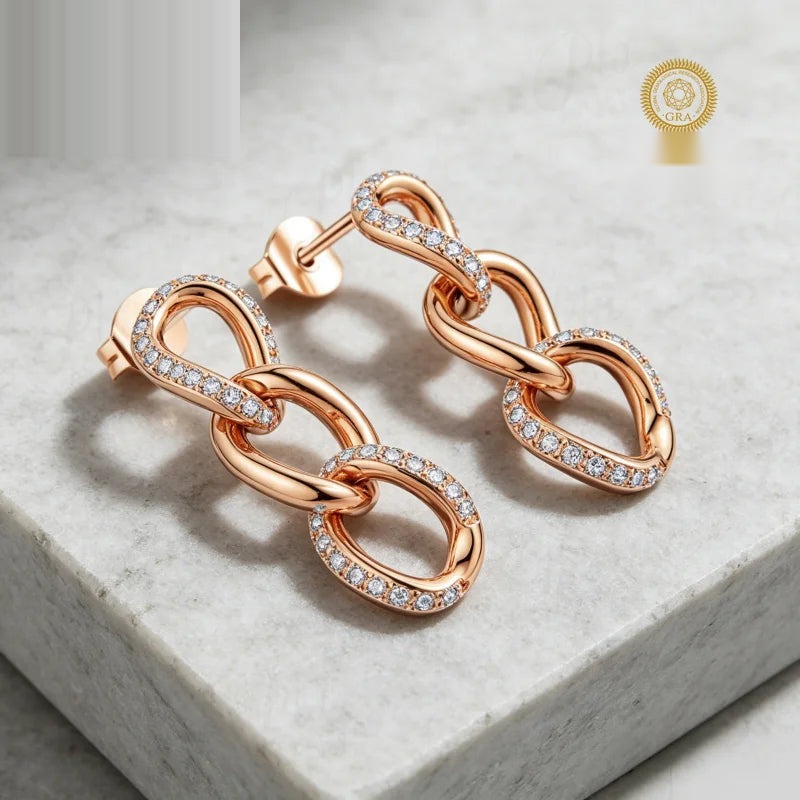
Graded moissanite stones come with GRA or IGI papers documenting their characteristics. These papers serve two purposes in a wholesale program: they support the accuracy of your product descriptions, and they give your retail customers documentation they can reference at the point of sale. Match the paper to the stone lot in your records so any customer inquiry can be answered from documentation rather than guesswork.
Logistics: Getting Earrings to the US on a Predictable Schedule
DDP delivery to the US takes 5 to 8 days after pre-shipment clearance. DDP means the shipment arrives with duties and shipping handled on the seller side, so your landed cost is known at the quote stage and no surprise brokerage fees appear at the border. For earrings, which are light and compact per piece, air freight under DDP terms is the standard arrangement for both sample orders and bulk runs.
Build the 5 to 8 day transit into your launch calendar and confirm the delivery address and any warehouse receiving requirements before production ends so nothing sits in customs queue.
Practical Planning Tips for Your First Custom Earrings Order
- Start with a 1-piece stock order to verify quality before committing to a 30-piece custom run.
- Specify metal accurately in every document, using terms like 925 sterling silver or gold vermeil rather than vague "gold" language.
- Set carat weights in the brief, since loose stones are priced per carat and stone size drives the final per-piece quote.
- Plan the full calendar: 7 to 10 days sampling, 15 to 25 days production, 5 to 8 days DDP transit.
- Use PayPal for sample payments and structure bulk payments as a 30 percent T/T deposit with a 70 percent balance before shipment.
- Request QC records and GRA or IGI papers with each shipment for your compliance files.
Order Terms for Wholesale Buyers
MOQ is 1 piece for stock styles and 30 pieces for custom work, and loose stones are sold by the carat. Sampling takes 7 to 10 days, and bulk production runs 15 to 25 days after the sample is approved. Pricing is quoted per piece or per carat depending on the item. Payment is T/T with a 30% deposit and the 70% balance before shipment, and PayPal is accepted for sample orders.
Frequently Asked Questions
What is the minimum order for custom earrings?
Custom work starts at 30 pieces per style. Stock styles can be ordered with a 1-piece minimum, which makes them useful for quality checks and market testing before a custom commitment.
How long does the full process take from brief to delivery?
Sampling takes 7 to 10 days, bulk production runs 15 to 25 days after sample approval, and DDP shipping to the US takes 5 to 8 days. Total time depends on how quickly you approve samples and whether revisions are needed.
Can moissanite earrings be described as diamonds?
No. Moissanite is a lab-created diamond alternative and should be described as such in all listings and packaging. Graded stones include GRA or IGI papers that document their characteristics.
What metal options are available for OEM earrings?
Options include 925 sterling silver, 10K, 14K, and 18K solid gold, gold vermeil, and gold plated finishes. Plated and vermeil pieces must be marketed under those names, not as solid gold.
How are payments handled for sample and bulk orders?
Sample orders are typically paid through PayPal. Bulk orders use T/T with a 30 percent deposit at order confirmation and a 70 percent balance before shipment.
Start Your Custom Earrings Program
A custom OEM or private label earrings program is straightforward when the workflow, payment terms, and QC stages are clear from the start. Browse available styles and categories on our jewelry wholesale blog to see how other programs are structured, learn about our factory and capabilities on the about us page, and request a quote or start a design brief through our contact page.
Sources: Grading references: GIA gem education and GIA laboratory information.
Join the thread. Ask a sizing, setting or sourcing question and the bench answers.
Post a questionWritten By
Holycome Trade Desk
Gemologists and setters at our own workshop. We have been cutting moissanite and lab grown stones since 2013.