HOLYCOME EditorialOP
November 16, 2026 · 4 min read
Earrings: Size Consistency: The Spec That
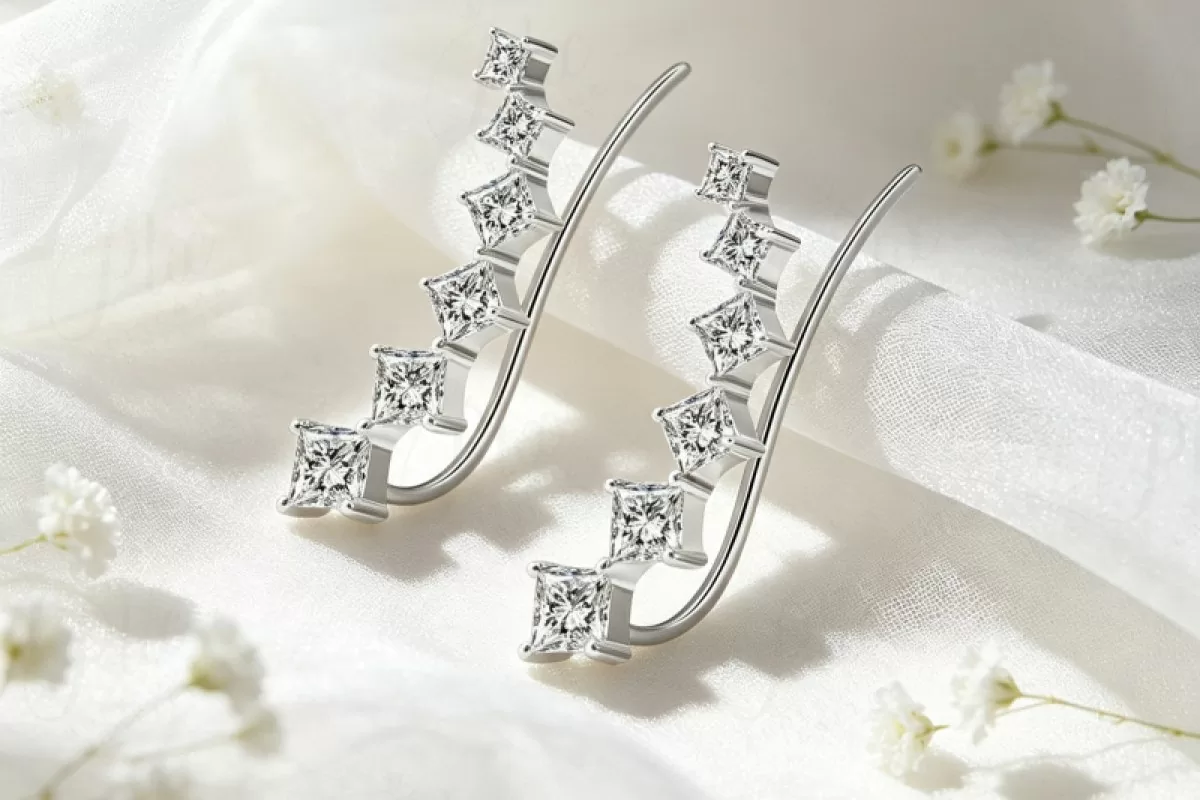
On earrings, size is the number one return reason that has nothing to do with taste. A half-size drift inside one lot is enough to turn a clean program into a stream of exchanges.
6 replies in this thread
Where size drift comes from
Three sources: the mold or CAD allowance, the polishing loss at the inner face, and the size stick used at the bench. On earrings, a 0.15 mm polishing loss is half a US size on a ring.
Ask which size standard the factory works to, US, UK or EU, and whether the stick is calibrated. Factories that answer vaguely are measuring by feel.
Set the reorder point from sell-through and lead time, not from the MOQ. Stock cover is a calculation, not a feeling.
Specifying the size run
Write the size curve, not just the range: for example US 5 to 9 with 20 percent at 6 and 7, 15 percent at 5 and 8, and 10 percent at 9. A flat curve leaves you with the extremes unsold.
Add the tolerance: plus or minus 0.1 mm on the inner diameter, measured after polishing, on earrings.
| Measure | Tool | Tolerance | Frequency |
|---|---|---|---|
| Ring inner diameter | Ring gauge | ±0.1 mm | 10 per size |
| Chain length | Tape | ±5 mm | 10 per SKU |
| Clasp opening | Caliper | ±0.2 mm | 5 per SKU |
| Ear post length | Caliper | ±0.5 mm | 10 per SKU |
Read the table as a checklist rather than a recommendation. The right row depends on the price band, the wear pattern and the channel you sell into.
Ask for the mill certificate and the stone invoice. Two documents turn a material claim into something an auditor can check.
Incoming measurement
Measure ten pieces per size with a ring gauge or caliper at the inner diameter. Record the result by size. A lot that drifts at one size is a mold problem; a lot that drifts across all sizes is a stick problem.
For chains and bracelets, measure the clasp and the total length, and check the extension chain if the design has one.
Repair and resize policy
Ask whether the design can be resized, and by how many sizes. An eternity band or a full-channel setting often cannot. That limitation belongs in the listing, not in the return conversation.
On earrings, a resizable design is worth a small price premium because it removes a whole category of returns.
The specification is the product. Two pieces built to the same six lines are the same product even when the price differs; two built to different lines are not.
What to check before the order
Run the five checks below in order. The first two protect the money, the last three protect the launch date.
- Name the size standard in the PO.
- Write the size curve, not only the range.
- Measure after polishing, not before.
- Record drift by size, not as an average.
- State resize limits in the listing.
If a supplier cannot answer three of the five, treat the quote as a starting point rather than a plan. Ask again in writing and keep the answer with the PO.
Frequently Asked Questions
Why do earrings sizes vary inside one lot?
Usually polishing loss at the inner face or an uncalibrated size stick. Ask for the post-polish measurement.
Should I use US or EU sizing?
Use the market you sell into. For US retail, US sizing with a stated tolerance is the cleanest.
Can a ring be resized after plating?
Yes, but the plating at the joint needs rework. Ask for the replating cost before you promise a resize.
How many pieces should I measure?
Ten per size for a first lot, five per size after that, plus every piece in a complaint sample.
What tolerance is realistic?
Plus or minus 0.1 mm on the inner diameter after polishing is a fair commercial standard.
How do I know a supplier is reliable?
Two clean repeat lots and two on-time shipments. Before that it is a sample, not a supplier.
Send the earrings size range and market. We return the size curve, the tolerance sheet and the resizing limits for each design. See the full range at HOLYCOME.
None of this is exotic. It is a document, a measurement and a date, repeated until it becomes a process.
Join the thread. Ask a sizing, setting or sourcing question and the bench answers.
Post a questionWritten By
HOLYCOME Editorial
Gemologists and setters at our own workshop. We have been cutting moissanite and lab grown stones since 2013.